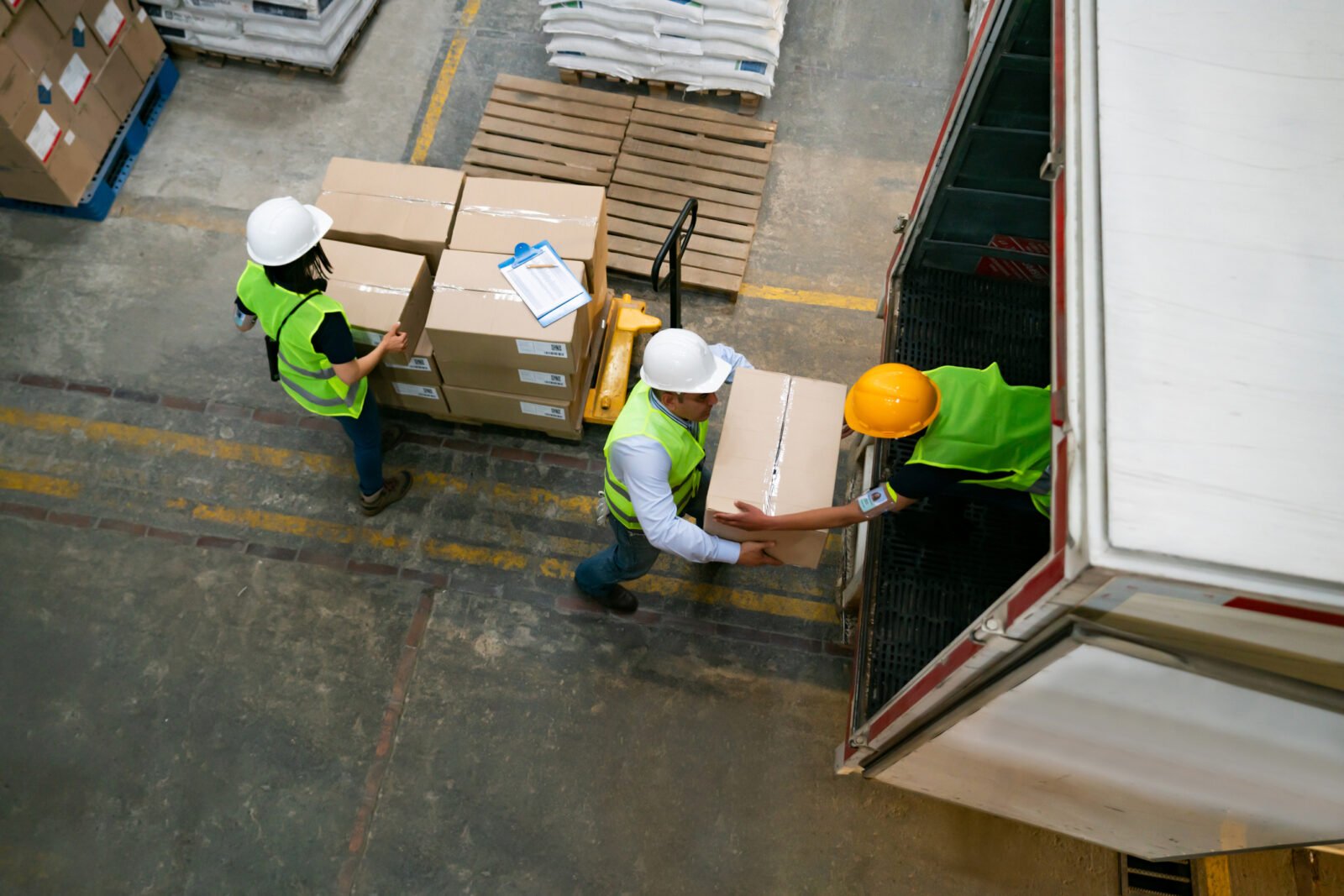
The age of instant gratification has well and truly bedded in, and logistics, as an industry, is finding itself at something of a crossroads. As operational costs increase in tandem with consumer demands for better, faster, more personalised experiences from delivery companies, the sector is faced with a dilemma: keep up, or be left behind.
Late or missed deliveries come at a cost: lost sales, strained customer trust and excessive operational expenses, just for starters. Consumers not only want deliveries to arrive at specific times, they expect it. Research highlights that shoppers rank on-time delivery as more important to their satisfaction than speedy delivery – they’re even willing to wait up to a week for their parcel if it means the delivery arrives within the promised arrival window.
For the logistics industry, it’s more expensive than ever before to meet these rising demands, with costs soaring for warehousing, utilities, fuel and labour. McKinsey estimates that in the US alone, costs have increased by 25% since 2019. Then, of course, there’s the challenge of clawing back those expenses through profits.
So, what’s the solution in this unique situation, as the market explodes and pressure grows to meet both internal and external demands? Satalia’s Head of Product for Supply Chain and Logistics, Luke Sneddon believes the answer lies in data – and that it’s within every retailer’s reach.
Driving change with data
In a Q&A session with Michael Anderson, Place-B Consultancy’s Managing Consultant, at last week’s Delivery Conference in London, Luke discussed the need for a data-driven step-change, one that would completely transform the industry’s approach.
Currently, Luke says that the industry takes a reactive rather than a proactive approach, and an inefficient one at that.
Satalia regularly works with logistics businesses and when it comes to planning for delivery – say around the Christmas peak or a few months into the future – the majority can’t reliably predict what the capability and capacity demands will be.
“Nine times out of ten,” Luke says, “our clients tell us it’s just guesswork.”
Satalia challenges clients to make a mindset shift and use the data and scenarios they have at their fingertips, with Luke telling clients: “You’ve got the data, we’ve got a scenario we could use – let’s try and model it so that you can be more predictive and get smarter.”
Failing to take this approach, he suggests, means potentially losing business if companies don’t release enough capacity in the network to cover upcoming peaks.
Michael, during the Q&A, agreed that the delivery industry is still reactive but asked: “Can AI change that? Is the investment worth it?”
Well, it may not be a magic bullet but it’s certainly worth a shot.
Precision planning for predictability
The supply chain is intrinsically linked from start to finish, right from the container in China to delivery at home, which means that breakdowns can occur anywhere in the chain if capacity is wrong. A single incorrect guess can – and does – cause havoc six months down the line, leading to disappointed customers and reputational damage.
Planning for 70 days in the future would historically fall to a best-guess scenario – but once businesses begin to understand the power of their data, says Luke, they can use AI to make planning more predictive and model the network accordingly while saving time, since AI can handle the “heavy lifting” by running different scenarios in hours or days that would take months manually.
About ten years ago, Luke recalls, Satalia worked with a client whose route planning involved an A–Z road atlas, a spreadsheet, and the transport planner’s “knowledge in the head”. After mapping the entire business process, Satalia built a final-mile delivery and route optimisation solution that reduced vehicle mileage by 20% for the same order set, opened a new revenue channel, increased the client’s NPS by 8% and enhanced their delivery slot offerings to shorter windows, boosting customer satisfaction and sales.
Instead of running on guesswork, like a spreadsheet or the information in someone’s head, it’s time to rethink the delivery strategy using data and predictive AI modelling. Essentially, using AI to remodel data helps make the delivery strategy less of a guessing game and instils confidence in deploying network changes.
Naturally, this level of change involves some investment, the level of which is for each business to decide, Luke says. Setting up a team to deal with data in this way can be too time-consuming and costly for some companies, which is why so many clients partner with Satalia as last-mile specialists: it’s often an affordable way to turn impossible logistics problems into predictable, profitable operations.
Crystal ball gazing in context
What data cannot do alone, however, is predict the future. It’s a common misconception, Luke tells Michael, that companies sitting on mountains of data believe that using AI will magically produce an accurate template for upcoming peaks and troughs.
“You can’t purely predict the future based on what happened in the past,” he says.
What’s required for the data to drive predictability is contextual awareness. As an example, if a business made 6,000 sales last March, what were the events that led to those orders? What were the scenarios that impacted on the data? The contextual awareness is just as vital as the data itself, because “if you don’t have the two, you’re not going to predict with any degree of certainty”.
With both bases covered, AI can do months of a planning or a whole finance team’s work in a matter of hours, Luke adds, which allows teams to manage far longer scenarios and flag potential problems well in advance. In turn, this enhances the customer service proposition and means that “the end consumer is getting a far better service which is very competitive as well”.
Simulating success
Although the benefits are clear to the converted, any kind of change is going to be met with hesitation by businesses already up against rising costs. It’s not surprising, then, that clients expect some sort of guarantee that this new approach will generate significant savings without impacting the status quo.
“If we need to present value, we can do a simulation,” Luke tells Michael. If, for example, a client would like to reduce fleet mileage by 10% or idle time by 20%, a simulation helps quantify how Satalia’s systems will move the dial. During the entire discovery phase, regardless of how long it lasts, clients also have the opportunity to speak to specialists to gain a better understanding of why the solution works the way it does – and differently from an off-the-shelf product.
Building trust is essential, Luke says, which is why simulations and test exercises are so effective not only at providing proof of concept, but also at not unnecessarily disrupting a business’ incumbent system. Switching to this new predictive approach is a massive change and investment, he tells Michael, and everyone needs to be onboard before any kind of major action is taken.
It’s completely possible, and in fact recommended, he continues, to pilot Satalia’s systems in isolation at a single location to begin with, often starting with a small depot. A “dual running” format means that the client keeps their current platform but sends Satalia the exact same data feed, allowing the new solution to be stress tested without interrupting the current setup – a kind of “digital twin”, Michael suggests.
Starting out small is preferable to a “big bang” change, Luke says, because it mitigates the risk of failure later down the line.
This live practice process provides insights into the efficiency of the current setup (or lack thereof), and tangible reductions in factors like miles covered or shift times, or an increase in fleet utilisation. Clients begin to feel more confident in making changes using the modelling environment and their mindset starts to shift, Luke says.
A problem-focused mindset shift
Approaching the challenge of optimisation with AI is an exciting prospect, especially for clients who have accumulated a lot of data already and are keen to utilise it, Luke tells Michael, who asks what the mindset shift needs to be for clients in this situation.
The wrong mindset, Luke says, is approaching the process without first understanding the problem. Too often, clients start with the data and a desire to use it but fail to establish clarity on the actual issue they need to address with that information, he explains.
As an example, a client might want to close two depots or reduce capacity in one because of a driver’s strike. They then need to check whether they have the necessary data to generate the desired results, flipping the data-first concept on its head.
Michael agrees that the wrong financial approach is working the business case backwards, starting with a yield in savings without identifying where the savings will come from.
This shift towards a problem-solving mindset, backed up with key data and context, makes best use of exciting emergent technology and ensures that the investment pays for itself.
Luke concludes by recalling how the investment in Satalia’s systems delivered an epiphany for a client last year. It was a challenge, he says, to shift the client’s mindset from being set in their spreadsheet-based ways, but once Satalia had re-engineered and simplified their network, the client saw an increase of 1.5% in their average orders per hour during the Christmas peak.
The client was delighted to have the ability to understand what was going on at the click of a button, while seeing the impact of a change in near real time, and freeing up time for the planners to focus on other business challenges.
This move to being more predictive, he says, means that the client is now always on the front foot, delivering a better end product and making life easier for everyone involved – because it’s not just consumers who deserve better, quicker and more personalised processes.


