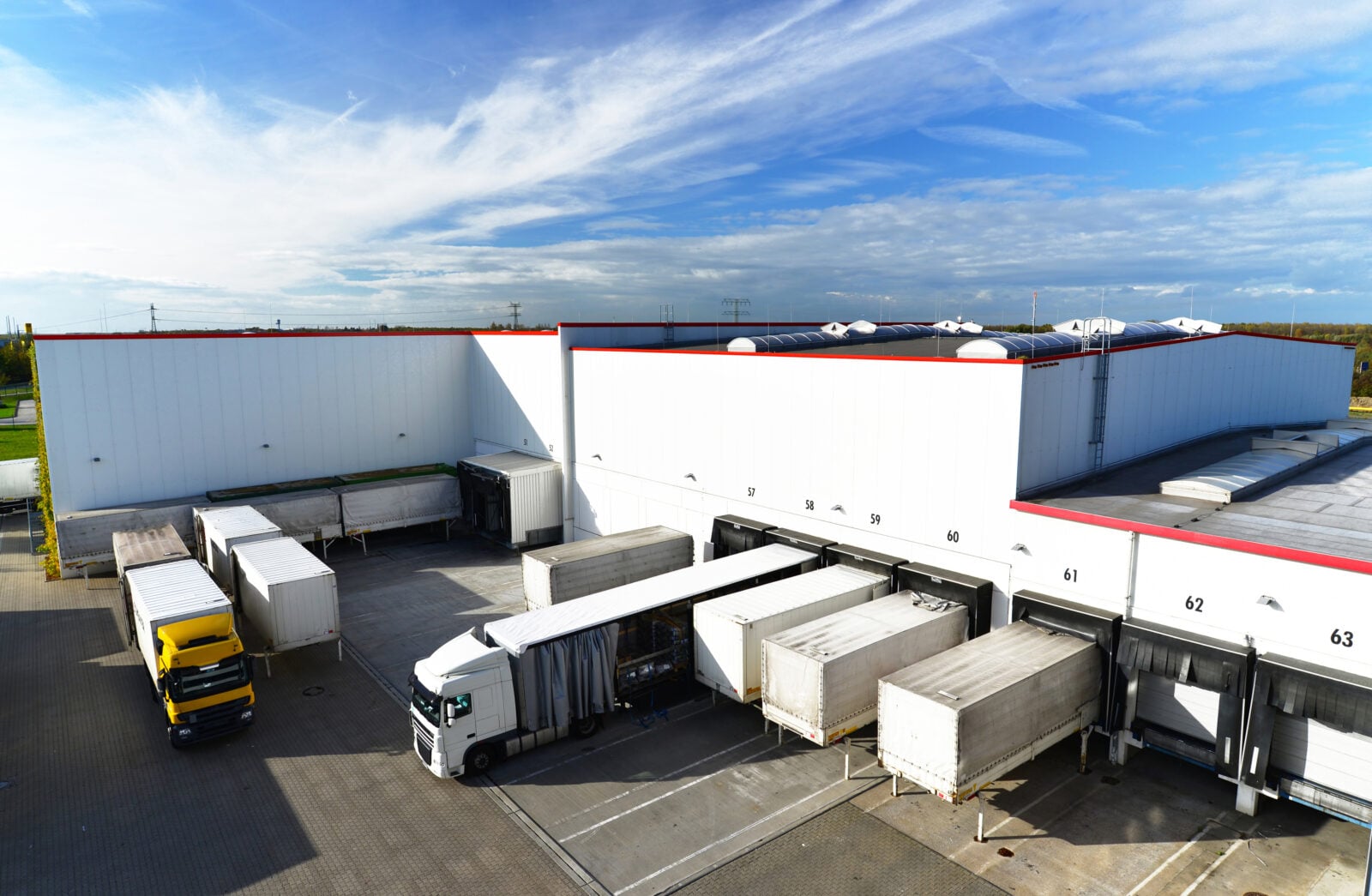
Middle-mile logistics sits quietly between the heavy lifting of the first mile and the high-stakes drama of last-mile delivery. The middle ground. Middle of the road. But middling along? Not quite.
This logistical midpoint is just as important as the stages before and after, because it represents a real opportunity for brands to battle it out for customer love. It’s the engine room of the supply chain… and yet, it’s the part too many businesses still run on spreadsheets, guesswork and hope.
The result is entirely predictable: congestion, inefficiencies – bottlenecks that choke off entire networks. When the middle mile falters, no number of downstream heroics can save the day.
This is the frontier where artificial intelligence (AI) becomes transformative. And companies that crack it will set the pace for an industry navigating rising customer expectations, shrinking margins and a world that refuses to sit still.
The middle mile is messy – which is why solving it matters so much
The middle mile is the circulatory system of any supply chain. Goods move between warehouses, hubs, regional centres, consolidation points and cross-dock operations. And this bloodstream isn’t tidy. It’s sprawling, dynamic and sensitive to everything from weather to labour shortages and sudden spikes in demand. It’s more like Frankenstein’s monster’s bloodstream than our own: a patched-together network ready to spring leaks or clot at any given moment.
Unfortunately, most businesses treat the middle mile as a cost to contain rather than a strategic advantage. They rely on fixed schedules, rigid routing and simplistic planning methods that can’t react to real-world volatility. When disruptions hit – and they always do – planners scramble to patch things together.
This is where an AI-powered approach offers an entirely different proposition. Instead of urgent firefighting, you get accurate forecasting. Instead of rigid plans, you get adaptive tactics that evolve throughout the day. And instead of human planners drowning in spreadsheets, you get systems that learn, adjust and optimise continuously.
Satalia’s analysis of how AI is transforming delivery logistics and supply chains highlights how companies that embrace intelligent optimisation unlock greater efficiency, reduce emissions and dramatically improve reliability across their networks. Those gains are measurable and immediate, because AI thrives in exactly the kind of messy, variable environments the middle mile depends on.
Why traditional planning collapses under modern pressure
Legacy planning systems were built for linear problems. But today’s supply chains are detailed networks, shaped by constraints that shift hour by hour. When you try to plan them manually, you’re effectively trying to predict the weather with a coin toss.
Several fault lines run through traditional approaches:
- They assume demand is stable. It isn’t.
- They assume capacity is predictable. It rarely is.
- They assume the real world behaves like a neat flow chart. It never has.
Human planners are skilled but they’re not superhuman. They can’t run thousands of scenario simulations or re-optimise a network every few minutes when a vehicle breaks down or a warehouse hits capacity. And they shouldn’t have to.
AI automates this complexity with a level of precision no manual approach can match. Machine learning models spot patterns and generate accurate forecasts. Reinforcement learning and advanced optimisation find the best way to allocate resources and orchestrate movements across the network. All of this happens at speed, with the ability to adjust instantly when the world changes.
This is how AI transforms the middle mile from a stumbling block into a strategic powerhouse.
AI gives supply chains the ability to think, not just react
The middle mile is full of decisions. Thousands of them. Where to route goods. When to dispatch vehicles. How to consolidate loads. Which facilities need pressure relief. How to maintain service levels while controlling costs.
With AI, these decisions aren’t left to chance or outdated rules of thumb. They can be modelled, tested and optimised with live data.
Satalia’s work across logistics shows AI excels in three critical areas:
Forecasting what’s coming
Machine learning processes historical patterns, market indicators, weather data and operational signals to predict demand with far greater accuracy. In the middle mile, better forecasting means better planning for demand peaks and troughs and fewer nasty surprises further down the line. Find out how Satalia’s systems improved forecasting accuracy for DFS by 50%.
Planning intelligently across the network
AI doesn’t just plan a route: it coordinates entire networks as living systems. It can balance loads across warehouses, avoid bottlenecks and make decisions that consider operational realities such as driver hours, facility constraints and fleet availability. This creates a more resilient and efficient middle mile. Here’s how Satalia’s specialised AI optimised 400,000 miles for Tesco.
Optimising in real time
This is where traditional systems crumble. AI can re-optimise continuously as conditions change. If a hub becomes overloaded, it can reroute flows. If a vehicle is delayed, it can adjust dispatch schedules. If demand spikes, it can reshape the plan for the rest of the day. The result is a dynamic network rather than a static one. Optimising in real time helped Satalia improve fuel efficiency for this client by 18%.
In other words: AI brings intelligence, agility, and adaptability – three qualities the middle mile has needed for years.
The sustainability impact is impossible to ignore
For all the industry talk about sustainability, many organisations still rely on transport networks that waste fuel, under-use assets and make more journeys than necessary. Optimising the middle mile is one of the most direct ways to reduce emissions at scale.
AI makes it possible to:
- Consolidate loads more effectively
- Avoid congestion by shifting flows dynamically
- Route vehicles to minimise fuel burn
- Balance environmental goals with operational priorities
Importantly, middle mile optimisation also solves the significant problem of ‘shipping air’. While vehicles go out full of goods, they usually travel back full of air. By implementing AI, businesses can reduce empty miles by improving asset utilisation. After all, a journey that must be undertaken is better undertaken sustainably.
Because AI can evaluate millions of network constraints in real-time, businesses can identify immediate backhaul opportunities and enable dynamic rerouting rather than rigid, static journeys. This unified visibility helps eliminate wasted space, ensuring every kilometre driven delivers maximum economic and environmental value.
Satalia’s analysis shows businesses using AI in their logistics operations achieve substantial carbon reductions without sacrificing performance. This is the sweet spot – where doing the right thing is also the most cost-effective option. Sustainability doesn’t have to be a sacrifice when networks are designed intelligently from the ground up.
Why the middle mile is perfectly suited to AI
Some people assume AI is best suited to flashy consumer-facing tasks. Voice assistants. Personalised recommendations. Chatbots. But the middle mile is where AI earns its stripes.
It’s a domain defined by complexity, variability and interdependence. These characteristics make it difficult for humans and legacy planning systems, but they create the perfect environment for AI.
AI thrives when:
- There are vast data inputs
- The system needs continuous optimisation
- Outcomes are constrained by real-world rules
- Decisions compound rapidly over time
- Mistakes ripple out across the entire network
The middle mile ticks every box.
Middle-mile movements may not attract attention from the outside world but inside a business, they have a profound impact on cost control, reliability, customer experience and sustainability. An organisation that optimises the middle mile can respond to disruption faster, absorb shocks with less pain and grow without collapsing under its own weight.
Humans don’t disappear – they level up
Improving the middle mile with AI isn’t about replacing planners but letting them do their best work.
Right now, they spend most of their time wrangling spreadsheets, adjusting broken plans and fighting the same fires every day. It’s exhausting and deeply inefficient. With AI in place, planners can focus on strategic decisions, designing better networks and solving complex human-centred challenges that algorithms can’t touch.
AI handles the grunt work; humans handle the judgment calls. Everyone wins.
It also creates a more transparent organisation. AI systems can show why they make certain decisions and help teams understand trade-offs between factors like cost, speed, resilience and environmental impact. When planners understand the system, they use it more confidently – and they innovate on top.
Middle mile transformation unlocks last-mile excellence
The industry loves to obsess about last-mile delivery. It’s visible. Competitive. Brand-defining. But last-mile brilliance is impossible if the middle mile is buckling under pressure.
If goods arrive late at regional hubs, last-mile delivery schedules disintegrate. If loads are imbalanced, couriers compensate with inefficient routes. If middle-mile forecasting is inaccurate, last-mile reliability crumbles.
Boosting the middle mile is like strengthening the spine of the supply chain. Everything downstream stands straighter.
AI makes it possible to coordinate inbound and outbound flows, match capacity to demand and create predictability where there was once chaos. Successful middle-mile optimisation is the quiet hero behind every impressive last-mile delivery promise.
The businesses winning today are the ones with adaptable supply chains
We’re living in a world where change is no longer episodic: it’s constant. Global disruptions, economic uncertainty, extreme weather and shifting consumer habits will continue shaping supply chains for the foreseeable future.
Static planning won’t survive. AI-driven adaptability will.
Satalia’s real-world results show organisations embracing AI can pivot faster, scale more efficiently and shield themselves from the shockwaves that hit every supply chain sooner or later. This isn’t a “nice-to-have” upgrade; it’s how companies stay competitive in markets defined by volatility.
The middle mile is where adaptability pays off most because the compounding benefits of smarter operations accumulate day after day. And it’s where forward-thinking businesses are quietly building their strategic edge.
The overlooked frontier is ready to be conquered
For years, the middle mile has lived in the shadows. It didn’t seem exciting. It didn’t feel like a place where innovation would flourish. But the world has changed, and the pressures on supply chains have grown too intense to ignore.
AI has opened the door to a new era of middle mile logistics – one defined by intelligence, agility and purpose. Businesses that act now will build networks capable of handling whatever the world throws at them; those that don’t will find themselves stuck in old habits while their competitors pull away.
This is the moment to rethink what the middle mile can be. Not a cost centre, nor an operational headache, but a strategic frontier where AI can move mountains – and where the future of supply chain performance will be decided.


